
Outdoors only
Never run a portable generator in a home, garage, basement, crawlspace, shed, carport, porch or other enclosed or partly enclosed space. Opening doors and windows or adding fans does not make these places safe.
By Self Reliance Daily ·
Run a portable generator outdoors, more than 20 feet from every window, door and vent. Point the exhaust away from your home and every other occupied building. Never run it in a garage, basement, crawlspace, shed, carport or porch, even with doors open.
Carbon monoxide, usually shortened to CO, has no color or smell. A generator engine can produce a dangerous amount before anyone understands what is happening. The U.S. Consumer Product Safety Commission says one portable generator can produce as much CO as hundreds of cars, and more than 100 people in the United States die each year from portable-generator CO poisoning.
Moving the machine through the garage door does not finish the safety job. CO can enter through a nearby window, door, vent, air conditioner or attic opening. A CPSC staff review of reported fatalities from 2012 through 2022 found that some deaths happened even when the generator was outdoors because it was close enough for exhaust to enter an occupied space.
The safe plan uses several layers at once: enough outdoor distance, exhaust pointed away, clear ventilation around the generator, working CO alarms inside and a power connection that does not force the machine closer to the house.
Do not ask whether the generator is technically outside. Ask whether its exhaust can reach any opening or occupied building.
The current CDC guidance says more than 20 feet from windows, doors and vents. CPSC commonly says at least 20 feet from homes and buildings. This guide uses the stricter wording: more than 20 feet from every opening.
Never run a portable generator in a home, garage, basement, crawlspace, shed, carport, porch or other enclosed or partly enclosed space. Opening doors and windows or adding fans does not make these places safe.
Measure from the generator to every window, exterior door and vent, not just to the nearest wall. Check basement windows, dryer vents, soffit vents, fresh-air intakes and openings on nearby buildings too.
Turn the exhaust away from your home and other buildings that people can enter. Distance and exhaust direction work together. Neither replaces the other.
OSHA generator guidance calls for 3 to 4 feet of clear space on every side and above the unit. Keep it dry and follow the owner’s manual without moving it near a building opening.
A CO alarm warns about dangerous gas that people cannot see or smell. During an outage, the alarm must still have power. The latest CPSC storm guidance recommends battery-operated CO alarms or alarms with battery backup on every level of the home and outside sleeping areas.
Interconnected alarms are useful because all units sound when one detects danger. Test alarms monthly. Replace batteries and the alarm itself according to the manufacturer’s instructions and end-of-life signal. Follow local placement rules if they require additional alarms.
CPSC's alarm standards page says a standalone consumer CO alarm should meet the applicable UL 2034 standard. A combination smoke and CO alarm should meet both UL 2034 and UL 217. A digital display can be helpful for showing the highest recorded CO level, but the display does not change the response: leave when the alarm sounds.
An alarm is a backup warning layer. It does not give permission to run a generator indoors, under a porch or closer than the safe distance. A generator with a built-in CO shutoff also remains an outdoor-only machine.
Get everyone outside to fresh air immediately and call 911 from outside. Do not stay inside to open windows, silence the alarm or check the generator. Do not re-enter until emergency responders say it is safe. The most common symptoms include headache, dizziness, weakness, upset stomach, vomiting, chest pain and confusion. Heavy exposure can cause unconsciousness or death. People who are sleeping, intoxicated or otherwise impaired can die before noticing symptoms. Read the CDC’s CO symptom guidance and keep your household’s wider emergency information with your first aid and safety basics.
The CDC power-outage guide recommends an extension cord longer than 20 feet. Use individual heavy-duty cords made for outdoor use. The wattage rating of each cord must exceed the combined wattage of everything connected to that cord.
Before every use, inspect the full cord for cuts, tears, crushed spots, loose parts and missing or bent prongs. Use a grounded three-prong plug. Protect the cord from being pinched or crushed where it passes through a door or window. A specific wire gauge cannot be chosen safely from article advice alone because the load, cord length, generator outlet and manufacturer instructions all matter.
Connect appliances as the generator manual directs. Never plug a generator into a household wall outlet. This is called backfeeding. It can bypass household protection, start a fire and send dangerous electricity onto utility lines where it can injure or kill workers and neighbors.
Never buy or use a male-to-male cord. CPSC says these cords have exposed prongs that can become energized and have no legitimate household use. If you want to power selected home circuits, have a qualified electrician install the correct transfer equipment under local electrical code and utility requirements.
Rain may tempt people to move a generator into a garage or onto a porch. Refueling may feel urgent when the power is still out. Both shortcuts can turn a manageable outage into an emergency.
Water creates shock and electrocution hazards. Keep the generator on a dry surface where water cannot reach, puddle or drain under it. Dry your hands before touching the equipment. Follow the manufacturer’s wet-weather instructions.
If rain protection is needed, it must remain open and well ventilated. Never move the running unit into a building, partly enclosed space, porch or area near an opening.
Never refuel a running generator. Turn it off and let it cool. Fuel spilled onto hot engine parts can ignite. Refuel outdoors, away from ignition sources, and follow the fuel and shutdown steps in the owner’s manual.
Inspect for damage or loose fuel lines before starting. Do not operate damaged equipment.
Do not store gasoline, propane, kerosene or diesel inside the home. Use the properly labeled safety container required for that fuel and keep it away from fuel-burning appliances and ignition sources.
Local fire codes may set storage limits and locations. Follow those rules rather than stockpiling more fuel than you can store safely.

“The garage door is open.” An open door does not stop deadly CO from building up or entering the home.
“It is under the porch, so it is outside.” A porch, carport, shed, overhang near vents or other partly enclosed area can trap exhaust or direct it into the building.
“The alarm will warn us before anything bad happens.” A working alarm is essential, but it is a last warning layer. It cannot make bad placement safe.
“The generator has an automatic CO shutoff.” CPSC recommends this feature when buying a generator, but it does not replace the outdoor-only and distance rules.
“This short cord is fine for tonight.” A short cord encourages unsafe placement. A damaged, indoor-only or overloaded cord adds fire and shock hazards.
“I can power the house through an outlet.” Backfeeding can electrocute utility workers or neighbors and can start a fire. Use qualified installation and approved transfer equipment.
“I will top off the tank while it runs.” A hot engine can ignite spilled fuel. Shut down and let it cool first.
“CO smells like exhaust, so I will notice it.” CO itself is colorless and odorless. Do not use smell as a warning system.
Planning the location, alarms and cords in daylight is safer than making those decisions during a storm.
These categories support the official guidance. Product features never replace the generator manual, local code or safe placement.
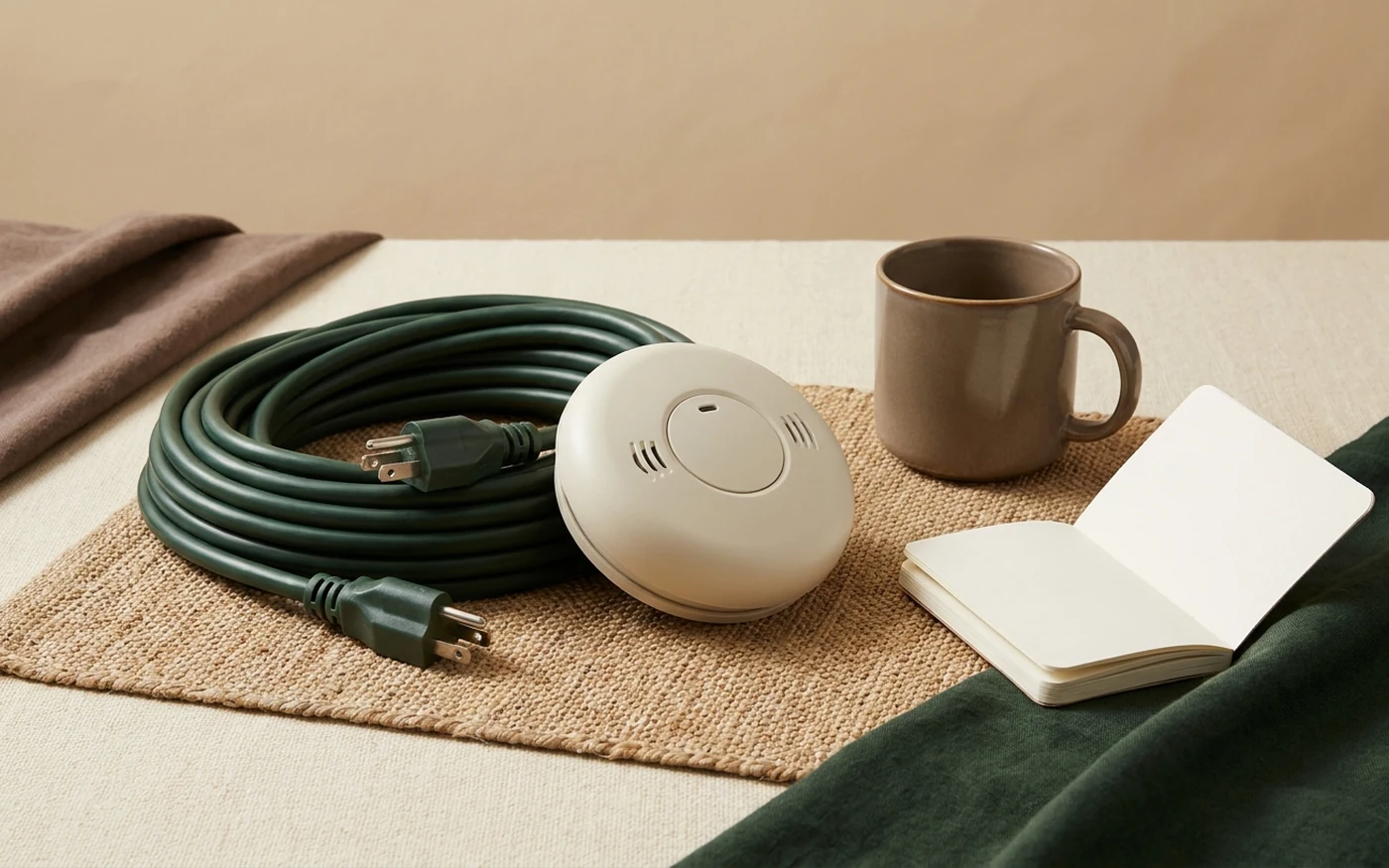
Affiliate disclosure: As an Amazon Associate, Self Reliance Daily earns from qualifying purchases. The two search links below are affiliate links. Prices, listings and safety claims can change. Check the current product page, certification, cord rating and manufacturer instructions before buying. The images are category illustrations, not exact product photos.
Best for: keeping CO detection active when household power is off.
Check before buying:Best for: keeping the generator more than 20 feet from openings while powering suitable appliances.
Check before buying: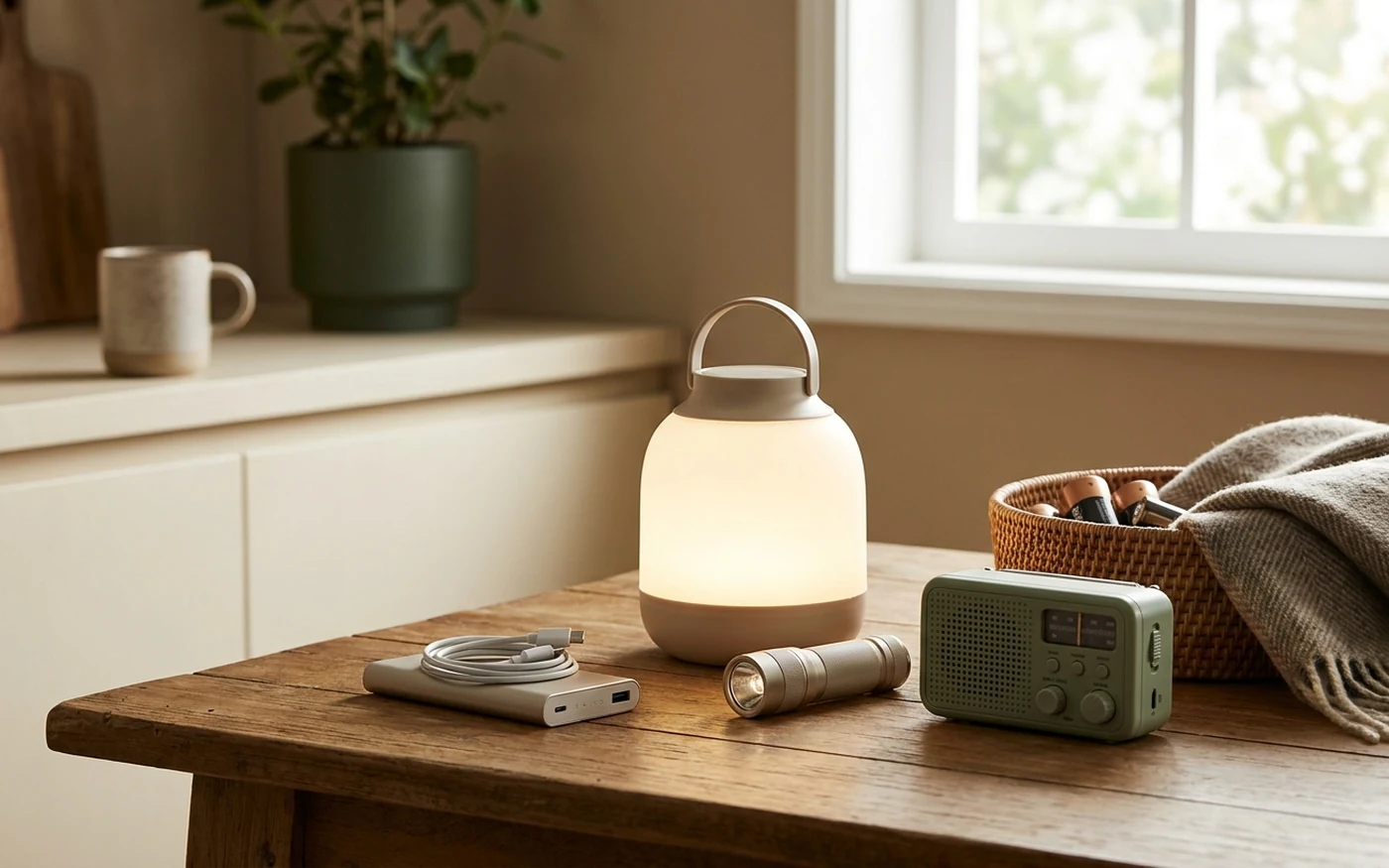
Use flashlights, headlamps, lanterns or battery-operated candles instead of open flames. Keep compatible spare batteries with the lights. The CDC includes emergency lighting and extra batteries in its power-source checklist, and CPSC recommends battery lighting rather than candles during an outage.
For a wider plan covering light, phone charging and alerts before larger backup power, use the power basics guide.
This article uses U.S. federal safety guidance. Local building, fire and electrical codes may add requirements.
Generator safety is one part of a calm outage plan. Cover indoor lighting and phone power, first aid information and small-space supplies before the next warning arrives.