Small-apartment emergency kit

A compact 72-hour kit starts with water, not gadgets.

For one person, the official three-day water baseline is 3 gallons. That water alone weighs about 25 pounds before the containers. Calculate that first, then give food, light, information, medicine and sanitation one clear place to live.

By Self Reliance Daily ·

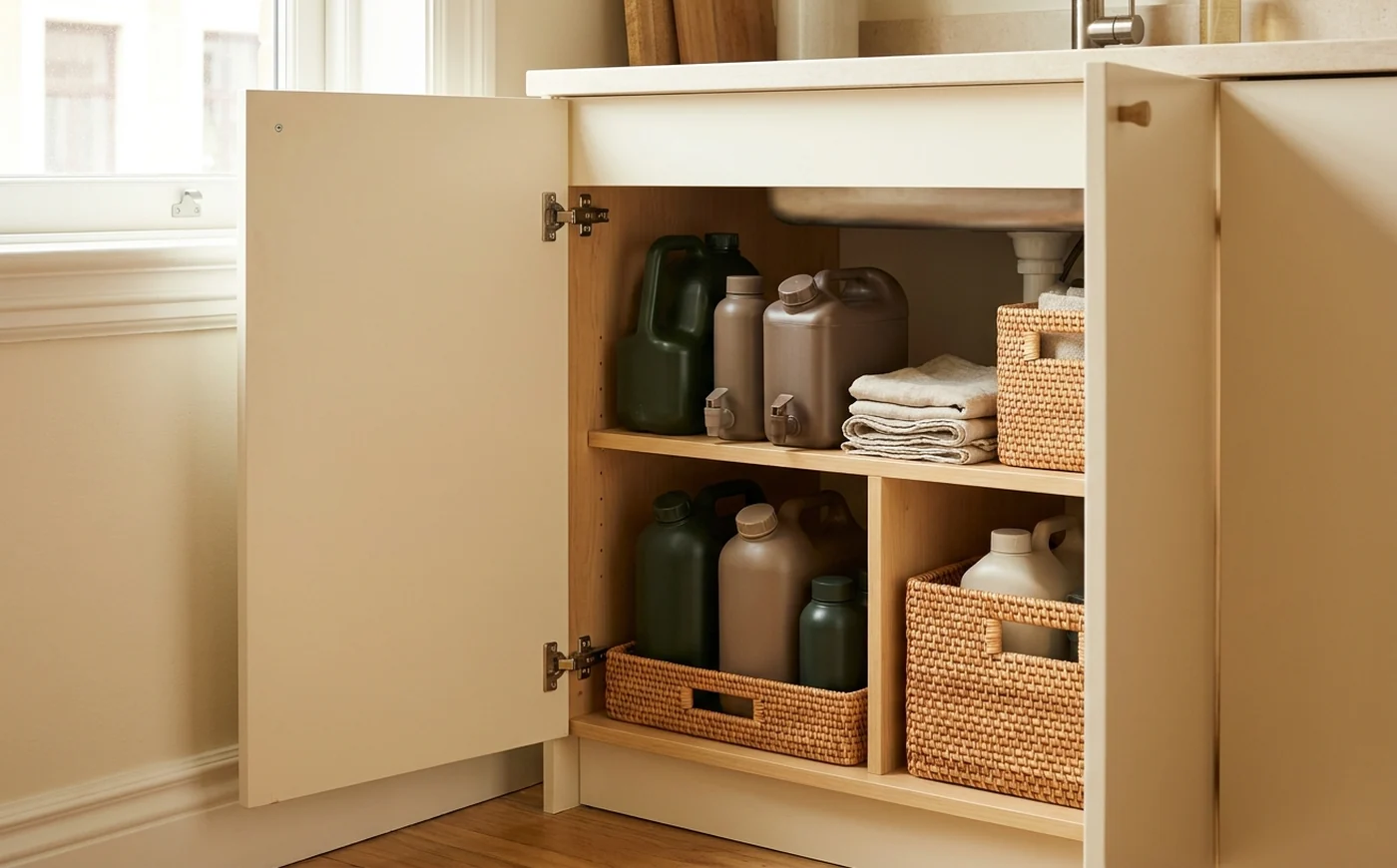
Emergency water containers and compact supply baskets organized inside a small apartment cabinet
Use one defined storage zone instead of scattering supplies around the apartment.
The realistic baseline

Seventy-two hours is a starting floor, not a promise that every emergency ends on day three.

FEMA's emergency-kit guidance says a household should have its own food, water and other supplies for at least 72 hours. It calls for one gallon of water per person per day and at least a three-day supply of nonperishable food. FEMA also recommends putting supplies in airtight plastic bags and keeping the kit in one or two easy-to-carry containers, such as plastic bins or a duffel bag.

That is useful advice, but apartment storage has a hard limit: water is heavy. A four-person household needs 12 gallons for the minimum three-day baseline. At roughly 8.34 pounds per gallon, that is about 100 pounds of water before counting bottles, food or any other supplies. Do not build one giant tote and call it portable.

The CDC recommends trying to store two weeks of water if possible. In a small apartment, begin with the complete 72-hour floor, then add a second clearly labeled module as space and budget allow. Readiness should improve in useful layers rather than depend on a perfect setup that never gets finished.

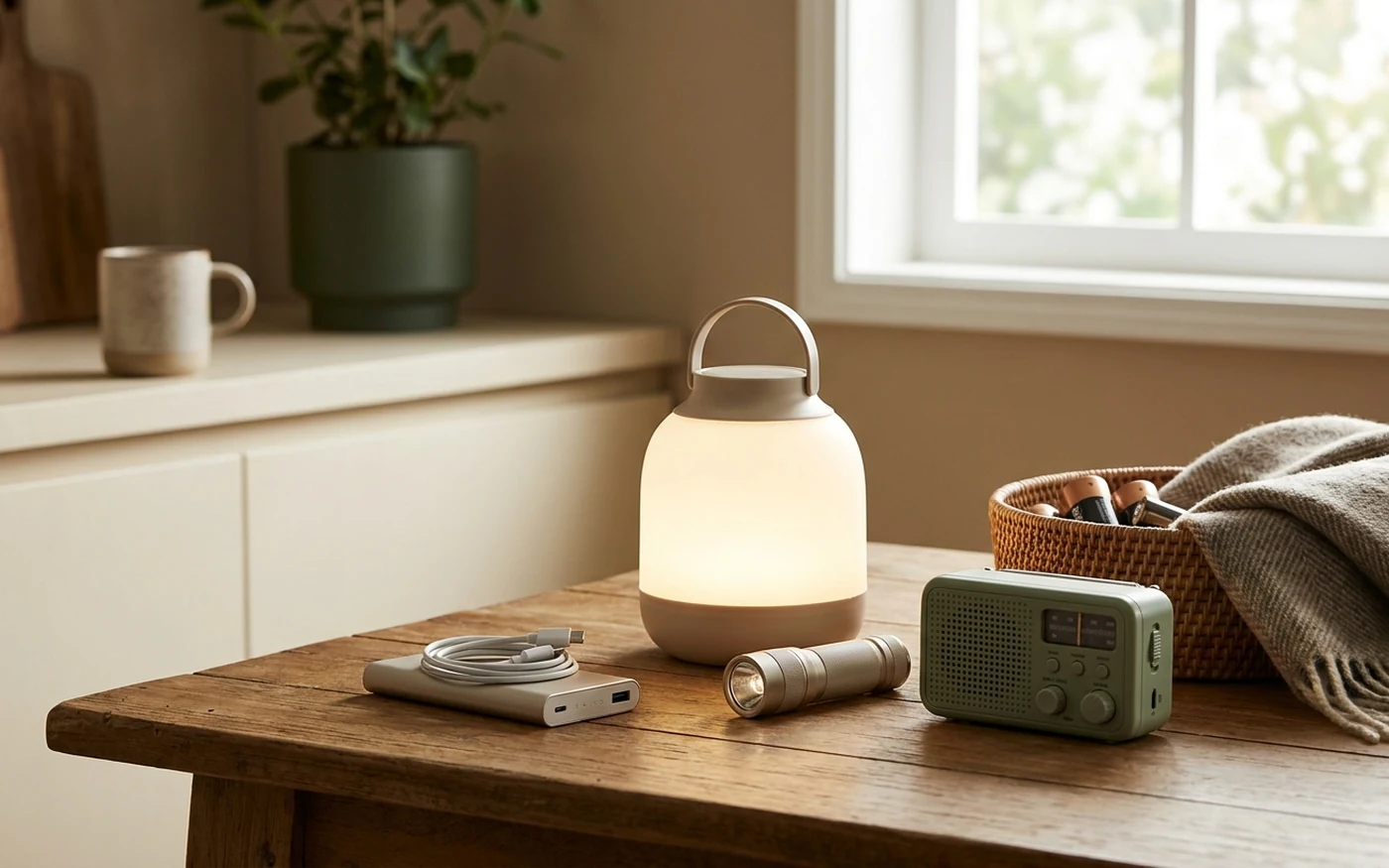
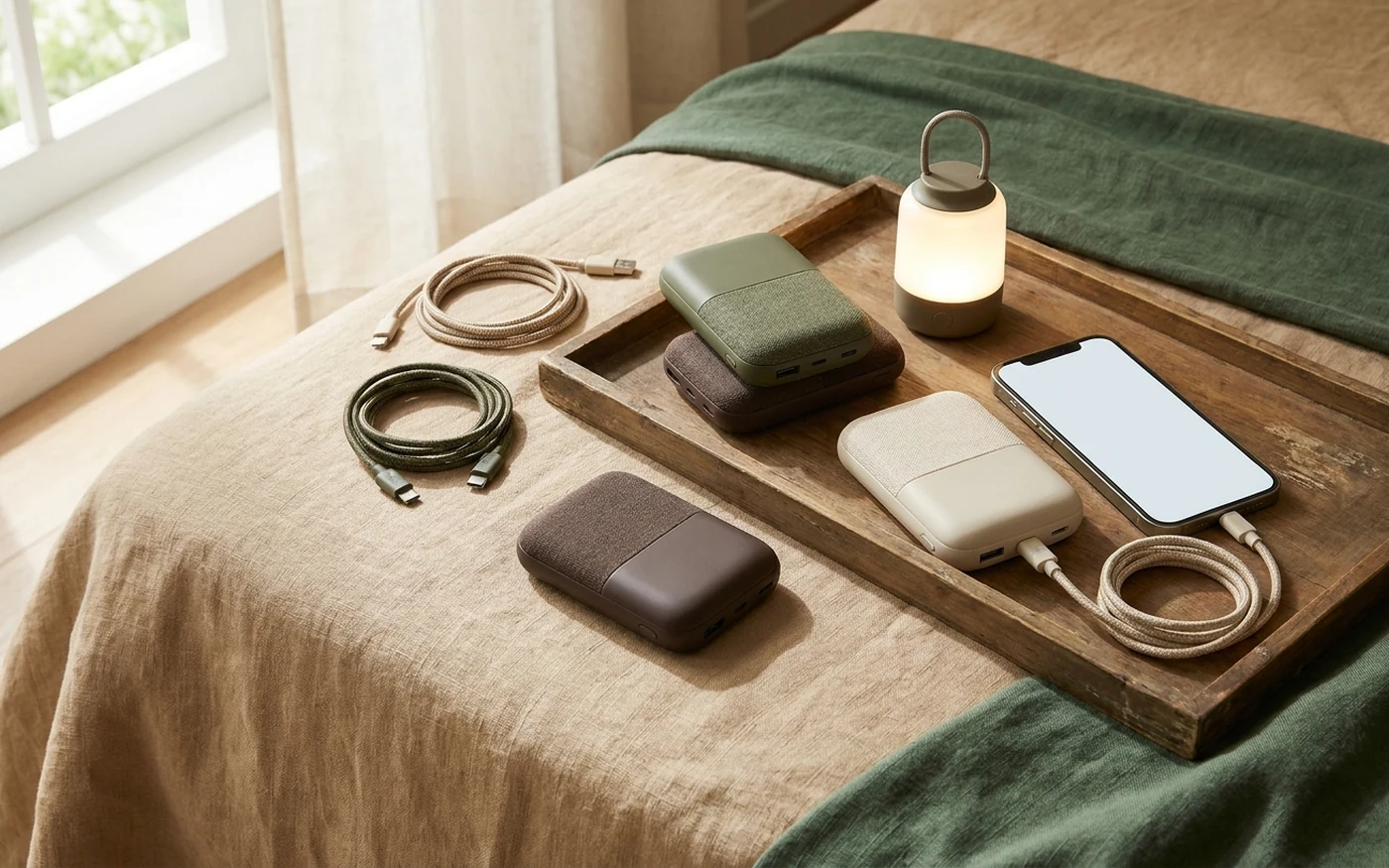
Compact outage tray with lantern, weather radio, phone, cable and power bank
Light, phone power and official information fit in a small module. Water needs its own honest space.
Solve the heavy requirement first. The rest of the kit can stay compact.
Step 1: water

Store 3 gallons per person for the first 72 hours.

The CDC baseline is at least one gallon per person per day for three days. That water covers drinking, cooking, brushing teeth and other household uses. Store more for pregnant people, people who are sick, pets and hot weather. This is stored safe water, not a promise that a small filter can turn every unknown source into safe drinking water.

Unopened commercially bottled water is the CDC's safest and most reliable emergency source. For refillable storage, use food-grade water containers with a tight closure, durable unbreakable construction and preferably a narrow opening that pours cleanly. Never reuse a container that held bleach, pesticides or another toxic chemical.

Label home-filled containers as drinking water and add the fill date. Replace that water every six months. For commercial bottled water, follow the printed expiration date. Keep stored water between 50°F and 70°F when possible, away from direct sunlight and toxic substances. The full storage and treatment limits are covered in the water basics guide.

Step 2: food

Build a three-day menu, not a box of random emergency snacks.

Official guidance sets a duration, not one calorie number that fits every adult, child and medical diet. Write down what each person will actually eat for three days, then store the package amounts that menu requires.

Plan

Use familiar shelf-stable food

Choose nonperishable food your household already tolerates and likes. Include specialty food for allergies, diabetes, other medical diets, infants and anyone who depends on nutrition drinks. Normal food is easier to rotate than a separate collection nobody wants to eat.

Prepare

Reduce power and water assumptions

Favor food that is ready to eat or needs little preparation. If the menu contains standard cans, keep a manual can opener in the food module. Do not build every meal around boiling water if your compact power plan cannot safely heat it.

Step 3: the compact core

Pack the jobs an apartment kit must perform.

A useful kit helps you see, receive instructions, communicate, handle minor injuries, maintain basic hygiene and leave with important information. Avoid buying duplicate gadgets that solve the same job.

Flashlight and battery lantern category visual

Light and information

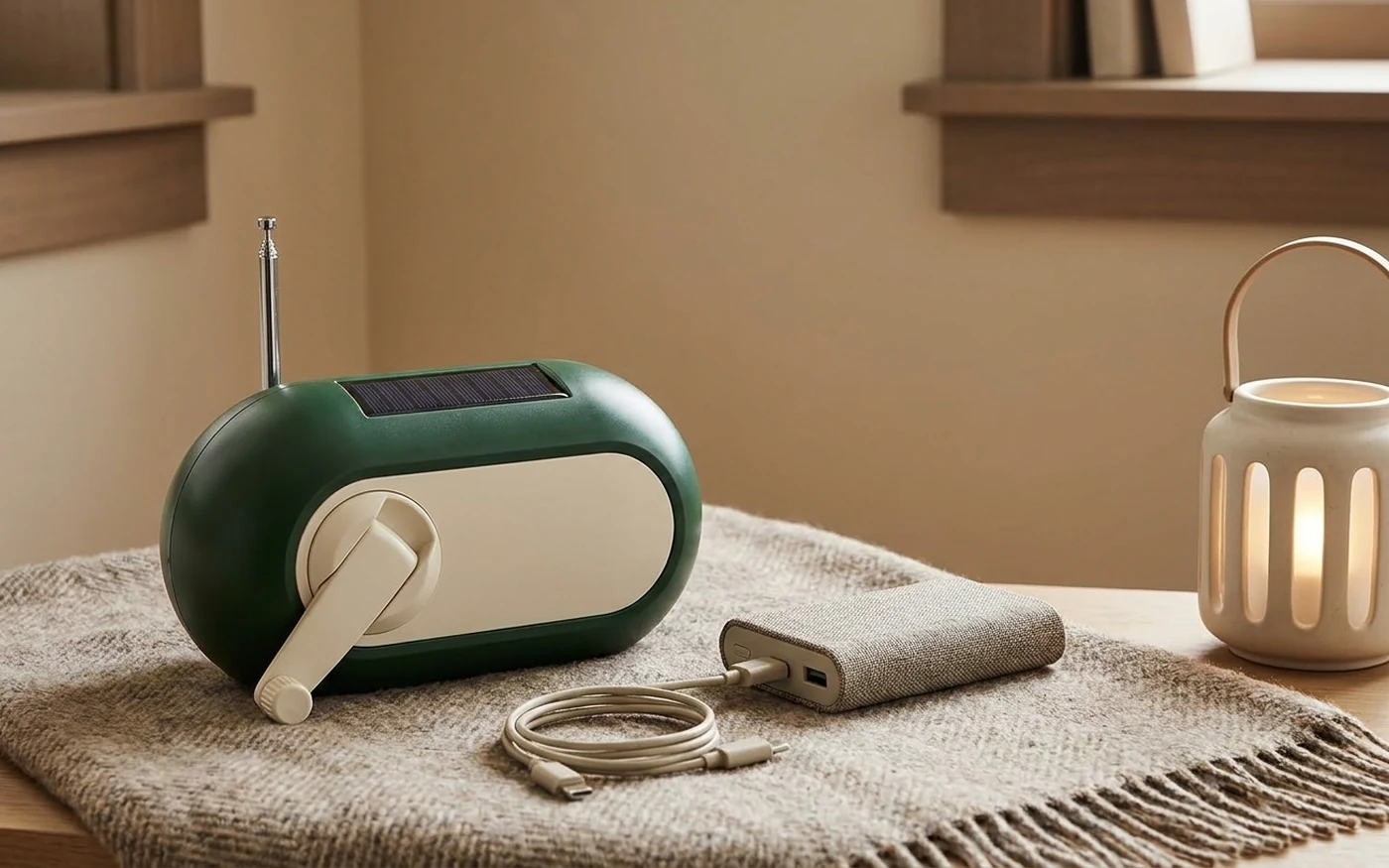
FEMA lists a flashlight, extra batteries and a battery-powered or hand-crank NOAA Weather Radio with tone alert. The CDC also recognizes a headlamp or battery lantern as emergency lighting. Pick a format your household can operate in the dark and keep the correct spare batteries with it.

No federal source reviewed sets a universal lumen number, runtime or waterproof rating. Compare controls, the actual power source and whether replacement batteries are easy for you to keep.

Phone power bank and charging cable category visual

Phone power and communication

Keep the phone charger, correct cables and a charged backup battery together. The CDC lists power banks, car chargers and adapters as backup-power options. It does not prescribe a minimum mAh capacity.

Choose compatibility before capacity claims. Test the cable with the phone and any adaptive device you expect it to charge. For a wider plan, use the power basics guide. If fuel-burning backup ever enters the plan, read the generator and carbon monoxide safety guide first. Never run a generator indoors.

Organized first aid and household safety supplies

Safety, sanitation and documents

FEMA's baseline includes a first-aid kit, whistle, dust mask, moist towelettes, garbage bags, plastic ties, local maps, plastic sheeting and duct tape. Add soap or hand sanitizer, toilet paper, menstrual supplies and other daily hygiene items your household uses.

Keep copies of identification, proof of address, lease or renter's insurance information, medication lists and emergency contacts in a watertight inner pouch. Store secure digital copies too. Include some cash, but official guidance does not set one amount.

One apartment home

Use a defined zone with two simple modules.

Choose a cool, dry location that occupants and support people can reach without moving furniture. Keep exits and hallways clear. Do not hide supplies behind seasonal storage, and do not spread essential pieces across five rooms.

Use the first portable container for medication, first aid, lighting, radio, phone power, documents, maps and immediate hygiene. Use the second for the three-day food menu, sanitation refills, blankets and household-specific supplies. Put vulnerable contents in labeled airtight bags. Keep the calculated water in the same zone or directly beside it, divided into containers the intended user can safely handle.

Place a paper inventory and the next review date on top. This layout applies FEMA's one-or-two-container guidance without pretending that 50 or 100 pounds of water belongs in one grab bin.

Customize before shopping

A generic checklist cannot know who lives in your apartment.

Daily medical, mobility, communication, infant and animal needs belong in the first plan, not in a future upgrade.

Medication

Plan refills with a professional

The CDC disability preparedness guidance recommends at least a one-week supply of prescription medication and a cooler for refrigerated medicine. Ask a doctor or pharmacist how to create and store an emergency supply. Do not change dosing or stockpile medicine on your own.

Keep a current list of diagnoses, medicine names, dosage, frequency, medical-supply needs and allergies. The CDC also recommends a cooler and chemical ice packs when medicine must remain cold. Storage limits vary by drug, so follow its label and professional advice.

Accessibility

Make the kit usable by its owner

Include batteries and chargers for hearing aids or other adaptive equipment, communication aids, important health documents and an extra mobility device if available. Keep a support-network contact list in a watertight pouch and tell trusted people where supplies are stored.

Ready.gov recommends a weather radio with text display and flashing alert for people who are deaf or hard of hearing, and Braille or large-print labels for people who are blind or have low vision. Plan accessible evacuation and neighbor support before elevators, transit or normal services are disrupted.

Pets and children

Add their normal daily needs

FEMA recommends at least three days of pet food and water, plus medication, records, ID, leash or harness, carrier, first-aid and sanitation supplies. Identify pet-friendly shelter, hotel, family or boarding options because general shelters may not accept household pets.

Add ready-to-use infant feeding supplies, diapers, wipes and any age-appropriate food when relevant. Pregnant people and people who are sick may need more than the basic water amount. Recheck children's clothing, formula and other size-dependent items more often than the rest of the kit.

Category comparison

Compare two useful categories without brand shortcuts.

These searches are starting points. Check current specifications, instructions, dimensions and listing details before buying.

Affiliate disclosure: As an Amazon Associate, Self Reliance Daily earns from qualifying purchases. The two links below are category-based Amazon searches, not product endorsements. Prices, availability and listing details can change. The visuals are category illustrations, not exact Amazon product photos.

Water first
Food-grade water storage container category illustration

Food-grade water storage containers

Best for: meeting the three-gallon-per-person baseline with a layout that fits your storage zone.

Check before buying:
  • manufacturer-confirmed food-grade use
  • tight closure
  • durable unbreakable material
  • filled weight
  • dimensions and cleaning access
Compare water-storage categories on Amazon ↗
Light and alerts
NOAA weather radio, flashlight and phone power category illustration

Outage light, radio and phone-power basics

Best for: seeing safely, receiving local instructions and keeping a priority phone available.

Check before buying:
  • NOAA Weather Radio and tone-alert support where relevant
  • simple controls
  • actual battery type
  • phone and cable compatibility
  • accessible alert features if needed
Compare outage-basic categories on Amazon ↗
Twice a year

A ten-minute review keeps a compact kit useful.

The CDC says to check emergency kits every six months so contents remain current and functional. Put two recurring dates on the calendar. Open both containers rather than assuming a sealed kit is ready.

Replace home-filled water at the six-month mark and follow printed dates on commercial water. Move older food into normal meals before it expires, replace what you use and discard expired, swollen, badly dented or corroded cans. Check medicine dates and update the medication, allergy and contact lists.

Turn on the flashlight and radio, inspect their batteries, recharge the power bank and connect every cable to the device it is meant to support. Review pet food, infant supplies, seasonal clothing, eyeglasses, hearing-aid batteries and mobility or communication equipment. Confirm that every household member or support person still knows the kit location.

Safety note

The kit supports official instructions. It does not replace them.

Leave when authorities tell you to evacuate. Follow local water advisories and do not assume a filter makes fuel, toxic chemicals or radioactive contamination safe. Never use a fuel-burning generator, grill or camp stove indoors. For medication, powered medical equipment or disability planning, build the details with the relevant healthcare provider, equipment supplier and support network.